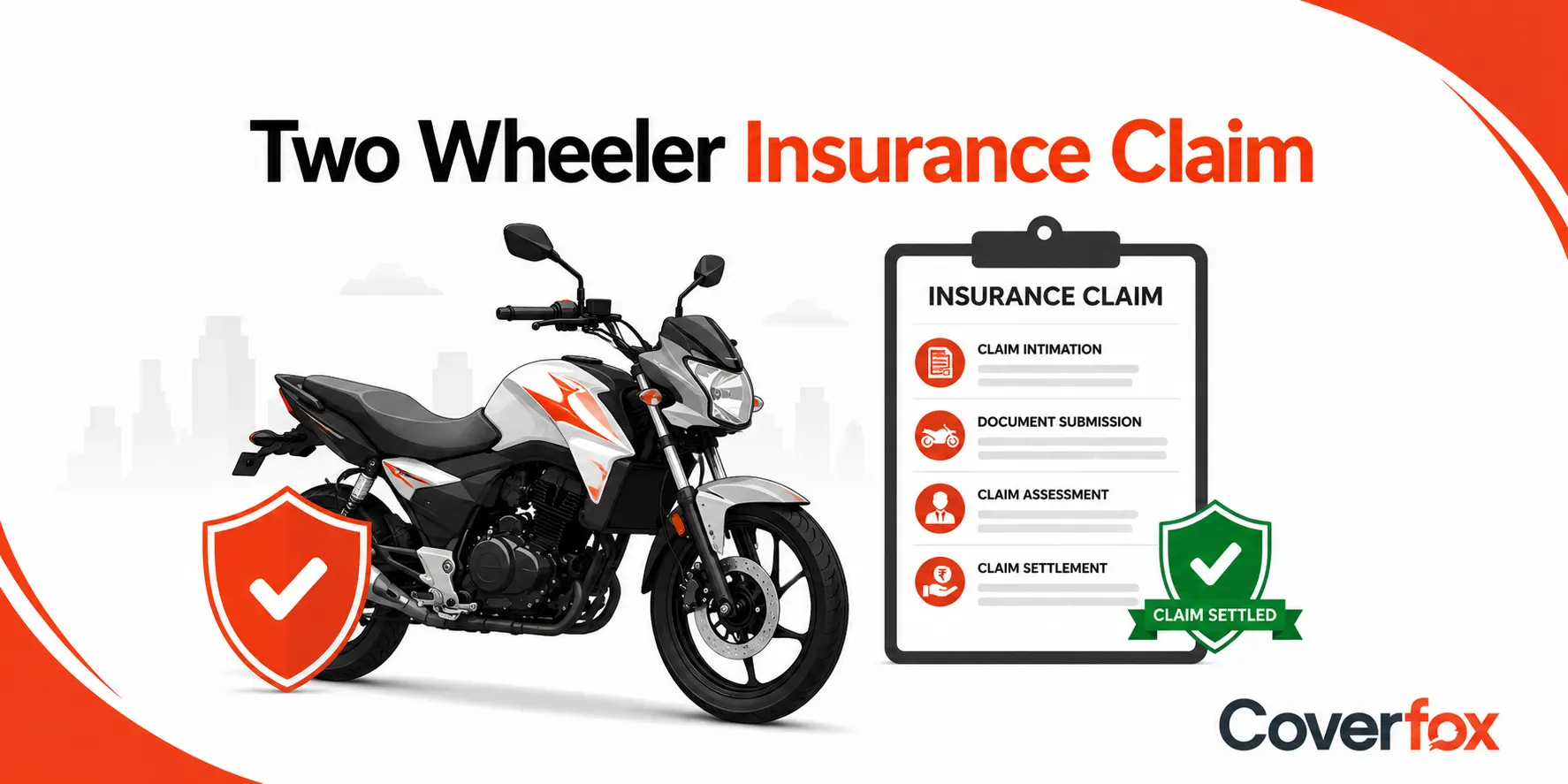
Accidents, theft, natural disasters, or unexpected damage can lead to costly repairs for your bike. A two-wheeler/bike insurance claim allows you to seek financial assistance from your insurer for covered losses, helping you get back on the road without bearing the entire expense yourself. The support you receive depends on the coverage included in your two wheeler insurance and the nature of the damage or loss. Knowing how the claim process works can make it easier to report an incident, submit the required documents, and receive timely claim support.
Types of Two Wheeler Insurance Claims
There are mainly two types of procedures adopted by bike insurance providers for claiming compensation from their clients, depending upon the nature of the repair shop chosen and the mode of claim filing.
Cashless Bike Insurance Claim
A cashless bike insurance claim allows you to get your insured two-wheeler repaired at a network garage authorised by the insurer. Once the claim is approved, the insurer directly settles the eligible repair costs with the garage. The policyholder is only required to pay the compulsory deductible, voluntary deductible (if applicable), and any expenses that are not covered under the policy.
Reimbursement Bike Insurance Claim
A reimbursement bike insurance claim gives you the flexibility to repair your bike at a garage of your choice, including non-network garages. In this process, you need to pay the repair costs upfront and collect all original bills and repair invoices. These documents are then submitted to the insurer, who reimburses the approved claim amount according to the policy terms and conditions.
When Should You File a Bike Insurance Claim?
Accidental Damage Claim for Bike
You can file a bike insurance claim if your two-wheeler is damaged due to an accident, collision, overturning, skidding, or any other covered accidental event. Depending on your policy coverage, the insurer will compensate for the repair or replacement costs of the damaged parts.
Theft Claim for Two-Wheeler
If your bike is stolen, you can raise a theft claim under a comprehensive or standalone own-damage bike insurance policy. To initiate the claim process, you must immediately inform the police and file an FIR. The insurer will verify the claim and process compensation as per the policy terms after the required investigation and documentation.
Bike Third-Party Liability Claim
A third-party liability claim can be filed when the insured bike causes bodily injury, death, or property damage to another person. Third-party bike insurance covers the legal liabilities arising from such incidents and helps protect the policyholder from financial losses resulting from third-party claims.
Natural and Man-Made Calamity Claims for Bike
Comprehensive bike insurance policies generally cover damages caused by natural and man-made calamities. These may include floods, cyclones, earthquakes, landslides, storms, fire, riots, strikes, malicious acts, vandalism, and similar covered events. If your bike suffers damage due to any such incident, you can file a claim for the repair or replacement of the affected parts, subject to policy conditions.
How to File a Two Wheeler Insurance Claim?
Filing a two-wheeler insurance claim is a straightforward process when the required steps are followed promptly. Whether the claim is for accidental damage, theft, or a third-party liability incident, timely reporting and proper documentation can help ensure faster claim settlement.
Step 1 - Inform the Insurance Company
Notify your insurer as soon as possible after the accident, theft, or damage. You can report the incident through the insurer's customer care helpline, website, mobile app, or nearest branch office. If you have purchased your policy through Coverfox, you can also seek claim assistance by writing to help@coverfox.com. Delayed intimation may lead to complications during claim processing and, in some cases, claim rejection.
Step 2 - File an FIR if Required
An FIR (First Information Report) is generally mandatory in cases involving bike theft, third-party injury or death, major accidents, fire incidents, vandalism, riots, or malicious damage. The FIR serves as an important document during claim verification and settlement.
Step 3 - Document the Damage
Before initiating repairs, take clear photographs and videos of the damaged bike, accident location, vehicle number plates, and any other relevant evidence. Proper documentation can help support your claim and simplify the insurer's assessment process.
Step 4 - Submit Claim Form and Required Documents
Complete the claim form and submit it along with the necessary documents. These may include the bike insurance policy copy, Registration Certificate (RC), driving licence, FIR copy (if applicable), repair estimates, and any additional documents requested by the insurer.
Step 5 - Vehicle Inspection by Surveyor
The insurer will appoint a surveyor to inspect the damaged bike and verify the claim details. The surveyor assesses the extent of damage, reviews the supporting documents, and estimates the repair cost before the claim is approved.
Step 6 - Repair and Claim Settlement
Once the claim is approved, the bike can be repaired. In a cashless claim, the insurer directly settles the approved repair costs with the authorised network garage. In a reimbursement claim, the policyholder pays for the repairs first and receives reimbursement from the insurer after submitting the required bills and documents for verification.
Two Wheeler Insurance Claim Process for Different Situations
While the basic claim filing procedure remains similar, certain steps and document requirements vary depending on whether the claim is for accident damage, theft, or third-party liability.
1. Bike Accident Insurance Claim Process
Step 1 - Inform the Insurer
Report the accident to the insurer immediately through customer care, website, app, branch office, or help@coverfox.com.
Step 2 - Share Claim Details
Submit the claim form and basic details of the accident along with supporting photographs.
Step 3 - Vehicle Inspection
The insurer appoints a surveyor to assess the damage and estimate repair costs.
Step 4 - Repair Approval
After inspection, the insurer approves repairs at a network or non-network garage.
Step 5 - Claim Settlement
The insurer settles the approved claim amount through a cashless or reimbursement process.
Documents Required for Accident Damage Claims
2. Bike Theft Insurance Claim Process
Step 1 - File an FIR
Report the theft to the police and obtain an FIR copy.
Step 2 - Notify the Insurer
Inform the insurer and initiate the theft claim process.
Step 3 - Submit Required Documents
Provide the claim form, policy details, RC, keys, and other requested documents.
Step 4 - Obtain a Non-Traceable Certificate
If the bike is not recovered, obtain a non-traceable certificate from the police.
Step 5 - Claim Settlement
The insurer verifies the claim and settles it based on the bike's IDV.
Documents Required for Bike Theft Claims
3. Third-Party Bike Insurance Claim Process
Step 1 - Inform the Insurer and Police
Report the incident to both the insurer and the local police station.
Step 2 - Submit Supporting Documents
Provide accident details, policy documents, and any available evidence.
Step 3 - MACT Evaluation
The Motor Accident Claims Tribunal (MACT) reviews the case and determines compensation.
Step 4 - Compensation Settlement
The insurer pays the compensation amount awarded by the tribunal as per policy terms.
Documents Required for Third-Party Claims
Common Reasons for Bike Insurance Claim Rejection
Having a bike insurance policy does not guarantee claim approval. Claims may be rejected if policy terms are not followed or required conditions are not met.
Delayed Claim Intimation
Failing to inform the insurer about an accident, theft, or damage within the specified timeline may lead to claim rejection.
Riding a Bike Without a Valid Licence
Claims may be rejected if the rider did not hold a valid driving licence at the time of the incident.
Riding Under the Influence of Alcohol or Drugs
Accidents that occur while the rider is under the influence of alcohol or drugs are generally not covered by bike insurance.
Expired Bike Insurance Policy
Claims cannot be raised if the bike insurance policy has expired or lapsed before the incident occurred.
Repairs Done Before Surveyor Inspection
Getting the bike repaired before the insurer's approval or surveyor inspection may result in claim rejection.
Incorrect or Incomplete Documents
Missing, inaccurate, or false information in the claim form or supporting documents can delay or invalidate the claim.
Damage Outside Bike Insurance Policy Coverage
Claims related to policy exclusions, unauthorised modifications, negligence, racing, or illegal activities are generally not approved.
Tips for Smooth Two Wheeler Insurance Claim Settlement
You can follow these simple tips to ensure your bike insurance claim process goes smoothly. And expect a satisfactory claim settlement:
Inform the Insurer Immediately
Report the accident, theft, or damage to the insurer as soon as possible after the incident.
Keep Policy and Vehicle Documents Ready
Maintain updated copies of your insurance policy, RC, driving licence, and other important documents.
Take Photos and Videos of the Damage
Capture clear images of the damaged bike, accident scene, and surrounding conditions as evidence.
Do Not Repair the Bike Before Inspection
Wait for the insurer's approval or surveyor inspection before starting repair work.
Provide Accurate Information
Share complete and correct details about the incident and submit all required documents on time.
Use a Network Garage for Cashless Claims
Opting for an insurer-authorised network garage can simplify repairs and reduce out-of-pocket expenses.
Renew Your Policy on Time
Ensure your bike insurance policy remains active to avoid claim-related complications and coverage gaps.
Cashless vs Reimbursement Bike Insurance Claims
| Feature |
Cashless Bike Insurance Claim |
Reimbursement Bike Insurance Claim |
| Garage Choice |
Repairs must be carried out at an insurer-authorised network garage. |
Repairs can be carried out at any garage of your choice. |
| Payment Process |
The insurer directly settles the approved repair costs with the garage. |
The policyholder pays the repair costs upfront and later claims reimbursement. |
| Upfront Expenses |
Lower, as only deductibles and non-covered expenses need to be paid. |
Higher, as the entire repair bill must be paid initially. |
| Claim Documentation |
Comparatively less paperwork for the policyholder. |
Requires submission of repair bills, payment receipts, and supporting documents. |
| Claim Settlement Time |
Usually faster as the insurer coordinates directly with the garage. |
May take longer due to document verification and reimbursement processing. |
| Convenience |
More convenient for policyholders seeking a hassle-free claim experience. |
Offers greater flexibility in choosing a preferred garage. |
| Best Suited For |
Policyholders who want quick repairs with minimal financial burden. |
Policyholders who prefer a specific garage that is not part of the insurer's network. |
How to Track Two Wheeler Insurance Claim Status Online
While not all insurers have this facility completely online, the general steps to check your bike insurance claim status are:
Visit the insurer's website or mobile app and log in to your account.
Navigate to the "Claims" or "Track Claim Status" section.
Enter your claim number, policy number, or registered mobile number.
View the latest status and updates related to your claim.
Upload any additional documents requested by the insurer, if required.
Alternatively, contact the insurer's customer care team or write to help@coverfox.com for claim assistance.
Disclaimer: The information provided on this page is for general informational purposes only. The claim process, coverage, documentation requirements, exclusions, and settlement timelines may vary depending on the insurer, policy type, and specific claim circumstances. Claim approvals are subject to the terms, conditions, exclusions, and underwriting guidelines of the respective insurance company. Policyholders are advised to refer to their policy documents and consult their insurer for the most accurate and up-to-date claim-related information.